


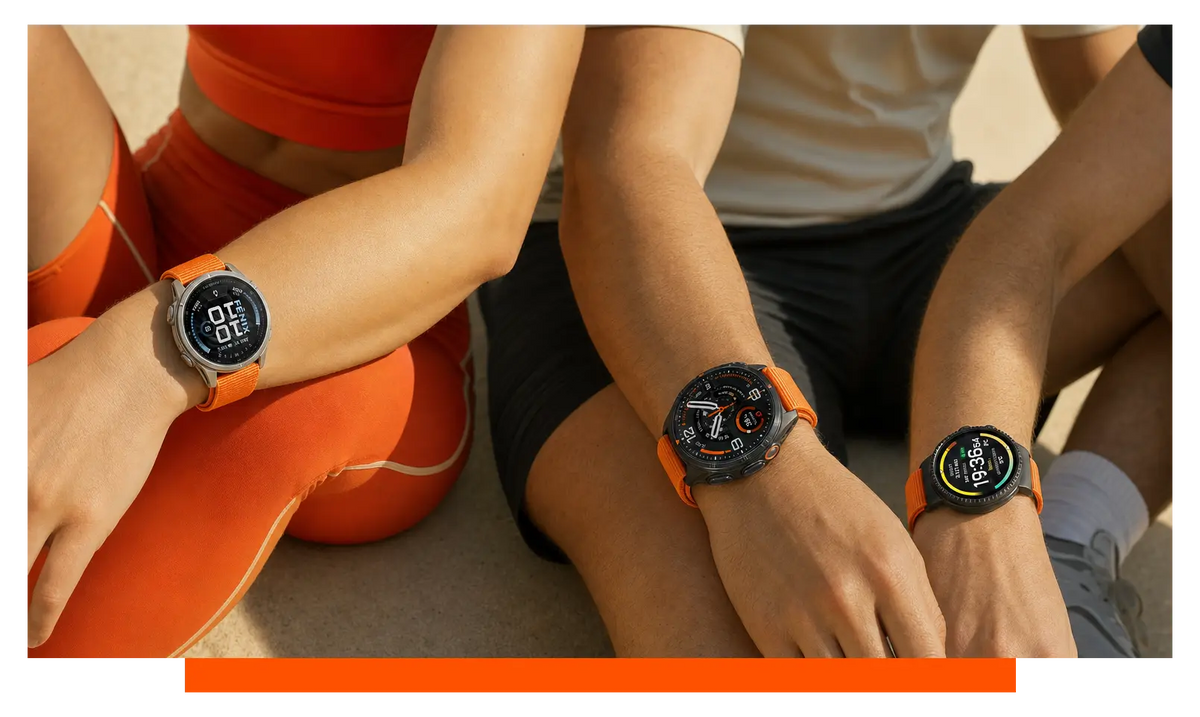
Garmin Fenix 9 is the best smartwatch for walking because it combines dependable outdoor tracking, route guidance and a design you can keep wearing beyond the walk. Choose Samsung Galaxy Watch Ultra 2 instead if Android-first calls, apps and notifications matter more than long-route focus.
On this page
This page compares the watches on the qualities that affect walking most: comfort, navigation, GPS endurance and usefulness away from exercise.
- What makes a good smartwatch for walking?
- Best overall - Garmin Fenix 9
- Best for long outdoor expeditions - Suunto Vertical 2
- Best lightweight outdoor option - Coros Nomad
- Best for Android connectivity - Samsung Galaxy Watch Ultra 2
- Best value for everyday walking - Amazfit Active Max
- How to choose
- Frequently asked questions
| Watch | Best for | Deciding spec | Available strap materials |
|---|---|---|---|
| Garmin Fenix 9 | Outdoor multisport | 10 ATM | Silicone, nylon, leather, milanese, metal |
| Suunto Vertical 2 | Outdoor expeditions | 65 h | Silicone, nylon, leather, milanese, metal |
| Coros Nomad | Hiking and fishing | 50 h | Silicone, nylon, leather, metal |
| Samsung Galaxy Watch Ultra 2 | Connected trail use | 5,000 nits | Silicone, nylon, leather, milanese, metal |
| Amazfit Active Max | Casual exercise | 25 days | Silicone, nylon, leather, milanese, metal |
The deciding question is whether the watch will stay comfortable from your daily walk through the rest of the day and overnight.
What makes a good smartwatch for walking?
A good walking smartwatch is comfortable enough for continuous wear, records dependable routes and lasts through the sort of walks you actually take.
All-day comfort and strap choice
Comfort depends on how securely the case and strap sit without pressure, trapped sweat or a bulky feel when you bend your wrist. A watch that feels acceptable for an hour can still become irritating during a long day, particularly under a cuff or while sleeping.
Overnight comfort matters because consistent wear preserves your sleep, resting heart-rate and recovery trends. Those trends provide context for your walks: you can see whether a brisk outing was a normal effort or landed on a poorly recovered day. Strap choice is part of that fit, not decoration. Breathable nylon can suit long, dry walks, while washable silicone is practical when rain and sweat are likely.
Route guidance and satellite positioning
Route guidance matters most on planned routes, unfamiliar paths and walks where repeatedly checking a phone would interrupt your pace. Offline maps add another layer of reassurance when mobile reception is weak.
Multi-band or dual-frequency positioning is useful around tall buildings, steep valleys and dense tree cover because reflected or obstructed satellite signals can distort a route. It is not the deciding factor for an ordinary walk through open streets or a local park. In those conditions, comfort and straightforward recording usually matter more.
GPS battery life
GPS endurance tells you whether a watch can record a long walk without forcing you to ration navigation or charge immediately beforehand. It is particularly important for full-day hikes, walking holidays and consecutive outings away from a convenient socket.
Typical battery life answers a different question: how often the watch disrupts your normal routine. If frequent charging makes you remove it overnight, you lose the continuous health context that makes a wearable useful beyond a single recorded walk.
Connected everyday features
Connected features matter when walking is only one part of what you expect from your wrist. Calls, notifications and a broad choice of apps can outweigh specialist route tools if you commute on foot, take short fitness walks and want one watch for the rest of the day.
A dedicated outdoor sports watch is not automatically better. It earns its place when route guidance, battery endurance and dependable outdoor controls come first; a connected smartwatch can be the better fit when phone interaction shapes every day.
Best overall - 1. Garmin Fenix 9 (47mm)
Garmin Fenix 9 is the strongest all-round choice for walkers who want serious route guidance without owning a watch that only makes sense on the trail.
It supports route navigation, offline maps and multi-band GPS, so it is well equipped for planned walks and unfamiliar ground. Its 10 ATM water-resistance rating also makes wet weather, muddy outings and waterside use less of a concern. The AMOLED display keeps maps and everyday information clear, while typical battery life is listed at 16 days.
- Case dimensions: 47 × 47 × 14.5 mm
- Navigation: Route guidance and offline maps
- Positioning: Multi-band GPS
- Water resistance: 10 ATM
- Typical battery life: 16 days
The fit question deserves attention. The case has real presence, but the choice of case sizes makes it easier to avoid an unnecessarily imposing watch. At the time of writing, Garmin Fenix 9 pricing was £859.99 for the 43mm model, £859.99 for the 47mm model and £949.99 for the 51mm model.
Our catalogue also shows silicone, nylon, leather, milanese and metal options across those case sizes. That range lets you use a washable or breathable strap for walks, then choose something less overtly sporty for work or evenings. You can see the available Garmin Fenix 9 47mm straps if that middle case size fits your wrist. Keep in mind these won't fit on the 43mm or 51mm variant.
Who it suits: regular walkers who explore unfamiliar routes, want dependable navigation and will use the same watch for broader training and daily health tracking.
Best for long outdoor expeditions - 2. Suunto Vertical 2
Suunto Vertical 2 is the better fit when all-systems GPS endurance and outdoor navigation matter more than keeping the watch visually discreet.
Its all-systems GPS battery is rated at 65 h, making it a reassuring choice for long hikes, walking weekends and routes where frequent charging would be awkward. Route navigation and offline maps are both present. The 1.5-inch AMOLED display gives maps useful space, while the glass fibre reinforced polyamide case is designed with outdoor use in mind.
- Case weight: 87 g
- All-systems GPS battery: 65 h
- Typical battery life: 20 days
- Water resistance: 100 m
- Storage: 32 GB
The trade-off is weight. At 87 g, this is the heaviest watch here with a stated case weight, so it is worth considering whether you will genuinely sleep in it. A softer strap can reduce pressure and movement, but it cannot make a substantial case disappear.
At the time of writing, the Suunto Vertical 2 was £529. Silicone, nylon, leather, milanese and metal Suunto Vertical 2 straps are available, giving you scope to separate wet-weather practicality from smarter daily wear.
Who it suits: walkers planning long days outdoors, multi-day trips or remote routes where map access and GPS endurance take priority over a light overnight feel.
Best lightweight outdoor option - 3. Coros Nomad
Coros Nomad is the most appealing choice if you want route-led outdoor features in a noticeably lighter case and can live without a full app-led smartwatch experience.
It supports route navigation, offline maps and dual-frequency GPS. The Memory-in-Pixel display favours practical outdoor visibility and battery efficiency rather than the richer look of AMOLED. Its high-strength polymer and aluminium alloy case weighs 41.5 g, which makes it much easier to forget on your wrist than a heavy expedition watch.
- Case dimensions: 47.8 × 47.8 × 16.4 mm
- Case weight: 41.5 g
- Display size: 1.3 inches
- All-systems GPS battery: 50 h
- Typical battery life: 22 days
- Water resistance: 5 ATM
Light does not mean small. The case is broad and relatively deep, so people with smaller wrists should judge its footprint as carefully as its weight. With the right tension, however, the low mass helps during sleep and reduces bounce when you pick up the pace.
At the time of writing, Coros Nomad was £319. Silicone, nylon, leather and metal Coros Nomad straps are available; nylon is a particularly sensible pairing when low weight and adjustability are the priorities.
Who it suits: hikers, anglers and regular country walkers who want navigation and long GPS recording without the weight or complexity of a full connected smartwatch.
Best for Android connectivity - 4. Samsung Galaxy Watch Ultra 2
Samsung Galaxy Watch Ultra 2 is the right alternative when calls, apps and notifications on an Android phone matter more than having the most route-focused walking watch.
Its Super AMOLED display reaches up to 5,000 nits, which helps you read directions, messages and workout data in strong sunlight. The titanium case is comparatively slim for this group, while 10 ATM and IP69K ratings make it a rugged option for poor weather and active use.
- Case dimensions: 47.4 × 47.1 × 10.7 mm
- Case weight: 61.5 g
- Peak brightness: Up to 5,000 nits
- Water resistance: 10 ATM and IP69K
- Storage: 64 GB
The flatter profile should interfere less when your wrist bends than a deep outdoor case, although its width and weight still make it a substantial watch. It makes most sense for someone who walks daily but also wants rich notifications, wrist calls and everyday apps. If long-route guidance is the main requirement, the Garmin, Suunto or Coros choices are clearer fits.
At the time of writing, Samsung Galaxy Watch Ultra 2 was £649. Its strap selection spans silicone, nylon, leather, milanese and metal, so you can move from a sweat-friendly walking setup to a smarter one without changing watches. Browse Samsung Galaxy Watch Ultra 2 straps to compare those fits.
Who it suits: Android users who walk for transport and fitness but prioritise calls, apps, notifications and a bright everyday display.
Best value for everyday walking - 5. Amazfit Active Max
Amazfit Active Max is the practical value pick for everyday walkers who want automatic walking support, offline maps and long battery life without paying for expedition-level hardware.
Walking tracking is included, while offline maps add useful reassurance when you leave familiar streets. Its all-systems GPS battery is rated at 64 hours, and typical battery life reaches 25 days. The 39.5 g case is also the lightest here among watches with a stated weight, an important advantage if you want uninterrupted day-and-night wear.
- Case dimensions: 48.5 × 48.5 × 12.2 mm
- Case weight: 39.5 g
- Display size: 1.5 inches
- Peak brightness: Up to 3,000 nits
- All-systems GPS battery: 64 hours
- Typical battery life: 25 days
- Water resistance: 5 ATM
Again, weight tells only part of the story. The broad case may dominate a narrow wrist even though it is light, so a close-fitting strap is important. At the time of writing, Amazfit Active Max was £169.
Silicone, nylon, leather, milanese and metal Amazfit Active Max straps are available. A lighter nylon or silicone option is the natural match if comfortable sleep tracking and daily walks are the reason you chose this watch.
Who it suits: casual exercisers, daily step-trackers and value-conscious walkers who want long battery life and a light case more than advanced connected apps.
How to choose
Choose according to where you walk, how long you record and whether the watch will remain useful after you get home.
- If planned routes and unfamiliar paths come first: choose Garmin Fenix 9 for the strongest overall balance of navigation, outdoor tracking and everyday use.
- If you spend very long days away from a charger: choose Suunto Vertical 2 for its expedition focus and long all-systems GPS endurance.
- If a lighter outdoor watch matters most: choose Coros Nomad, provided its broad case fits your wrist comfortably.
- If your Android phone shapes your day: choose Samsung Galaxy Watch Ultra 2 for calls, apps, notifications and excellent outdoor screen visibility.
- If you mainly take daily fitness walks: choose Amazfit Active Max for its light case, long typical battery life and accessible price.
Garmin Fenix 9 remains the best walking watch for dependable outdoor tracking and route guidance, but Samsung Galaxy Watch Ultra 2 is the more natural all-day companion when Android connectivity decides what stays on your wrist.
Frequently asked questions
These answers cover common walking situations that can change how useful your watch data is.
Do I need dual-band GPS for ordinary daily walks?
No. For open streets, parks and lightly wooded paths, dual-band GPS is unnecessary; it earns its place around tall buildings, deep valleys and dense tree cover where satellite signals are more easily disrupted.
Can a smartwatch count steps accurately when I push a pram, carry bags or use trekking poles?
Not consistently, because wrist-based step counting partly depends on normal arm movement. If your hands are occupied, record the walk with GPS for a more useful distance and route record.
Is wrist heart-rate tracking accurate enough for brisk walking?
Yes, wrist tracking is accurate enough for monitoring effort and keeping to a comfortable brisk-walking pace. Wear the watch snugly against bare skin, and use a chest strap when precise readings matter.
Will an Amazfit Active Max work well with a Samsung phone?
Yes. It works with Samsung Android phones through the Zepp app, including workout syncing, notifications, Bluetooth calling and Android message replies.




Leave a comment
All comments are moderated before being published.
This site is protected by hCaptcha and the hCaptcha Privacy Policy and Terms of Service apply.